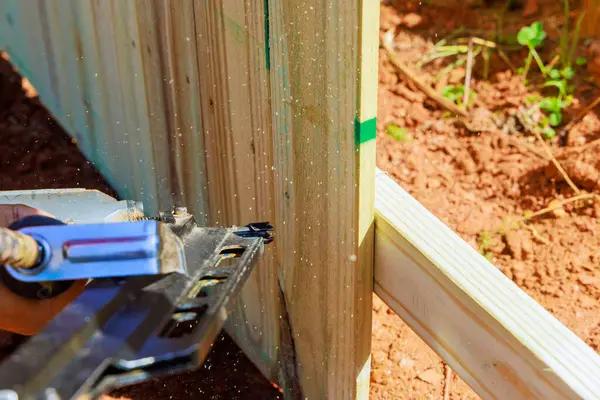
Installing a wood fence can significantly enhance the security, privacy, and aesthetic appeal of any property. Whether it’s for a residential home, commercial establishment, or agricultural land, a well-constructed wood fence serves as both a functional barrier and an attractive boundary marker. The key to achieving these benefits lies in fast and efficient installation processes that ensure durability and visual harmony with the surrounding environment.
The initial step in any successful wood fence installation is thorough planning. This involves understanding the specific needs of the property owner, whether they require privacy from neighbors, containment for pets or livestock, or simply an ornamental addition to their landscape. Once these requirements are clear, selecting the right type of wood is crucial. Common choices include cedar for its natural resistance to decay and insects or pine treated with preservatives for enhanced longevity.
Efficiency during installation begins with precise measurement and layout planning. Proper alignment ensures that all posts are equidistant and straight along the desired boundary line. Modern tools such as laser levels can greatly assist in maintaining accuracy throughout this process. Additionally, marking out post locations before digging helps avoid unnecessary adjustments later on.
Digging post holes is often one of the most labor-intensive aspects of installing a wood fence but using power augers can significantly reduce time and effort compared to manual digging methods. Ensuring each hole is at least one-third as deep as explore the content post provides stability against wind forces once installed.
After setting posts securely in concrete foundations—a critical step for long-lasting stability—attaching horizontal rails follows swiftly using galvanized screws or nails which resist rusting over time. These rails act as support beams onto which vertical pickets will be affixed; spacing them evenly not only contributes to structural integrity but also enhances visual uniformity across sections.
One cannot overlook safety considerations throughout this process: wearing protective gear when handling heavy equipment prevents injuries while adhering strictly to local zoning laws avoids future legal complications regarding property boundaries or permitted materials.
Finally comes finishing touches like staining or painting which protect wooden surfaces from weather elements while allowing customization according to personal taste preferences—whether opting for natural hues that blend seamlessly into surroundings or bold colors making striking statements about individuality within community settings alike!
In conclusion: Fast yet meticulous execution during every phase—from initial consultation through final quality checks—ensures satisfaction among clientele seeking reliable fencing solutions tailored specifically towards safeguarding their investments without compromising on style factors either! With proper preparation alongside skilled craftsmanship overseeing operations start-to-finish alike? Achieving optimal outcomes remains well within reach indeed!