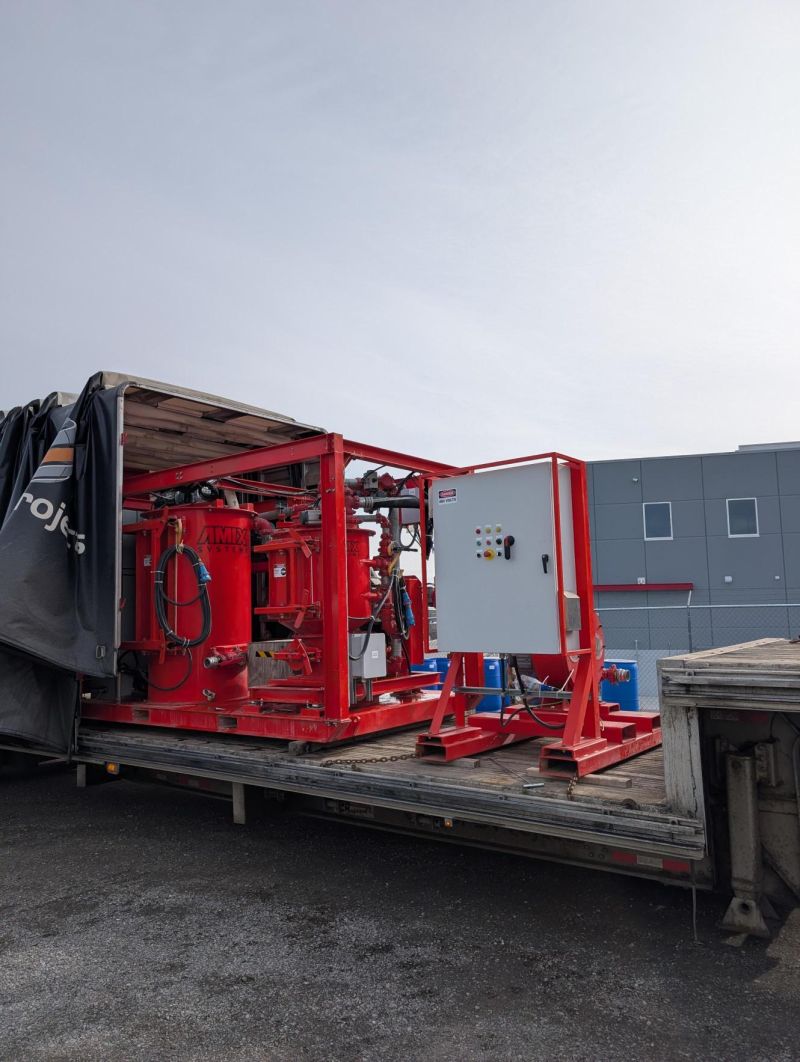
Pumpable grout plays a crucial role in soil stabilization within the field of civil engineering, offering an effective solution for enhancing ground strength and mitigating settlement issues. Soil stabilization is essential for ensuring the safety and longevity of various infrastructure projects such as foundations, retaining walls, tunnels, and embankments. The use of pumpable grout has gained prominence due to its adaptability, ease of application, and ability to penetrate fine soil pores.
Pumpable grout is a fluid mixture typically composed of cementitious materials, water, additives, and sometimes fine aggregates or chemical admixtures. Its primary function is to fill voids and bind soil particles together through injection under pressure. This process increases the density and shear strength of the soil while reducing permeability. Unlike traditional grouting methods that may involve coarse materials or dry mixes requiring compaction, pumpable grout‘s flowability allows it to permeate even low-permeability soils such as silts and clays effectively.
One significant advantage of using pumpable grout in soil stabilization is its versatility in different ground conditions. It can be tailored by adjusting the mix proportions to achieve desired properties such as setting time, viscosity, compressive strength, and durability. For instance, rapid-setting grouts are used where quick stabilization is necessary to minimize downtime during construction activities. Moreover, chemical admixtures like superplasticizers improve workability without increasing water content; this ensures higher final strengths while maintaining pumpability.
The injection technique also contributes significantly to the success of soil stabilization with pumpable grout. Pressure grouting involves injecting the material into pre-drilled holes or directly into weak zones identified through site investigations. Controlled pressure ensures deep penetration into fractures or loose layers without causing excessive uplift or fracturing surrounding strata unintentionally. Monitoring parameters like injection pressure volume helps optimize performance while avoiding environmental impacts such as groundwater contamination.
Environmental considerations have become increasingly important in modern civil engineering practices involving grouting operations. Pumpable grouts can be designed with environmentally friendly components that reduce toxicity risks during both application and long-term service life underground. Additionally, stabilized soils exhibit reduced erosion potential which benefits slope stability adjacent to construction sites.
In conclusion, pumpable grout stands out as an indispensable tool for improving subsoil conditions in various civil engineering projects aimed at supporting structural loads safely over time. Its customizable nature combined with efficient delivery methods enables engineers to address complex geotechnical challenges by reinforcing weak soils economically while minimizing environmental disturbances. As research continues on advanced formulations incorporating novel materials like nanomaterials or bio-based additives,the future applications of pumpable grout promise even greater sustainability alongside enhanced mechanical performance in soil stabilization efforts worldwide.